Upcoming Events and Socials
July 31, 2026
Almshouse ParaCon II, 2026
September 24, 2026by: Felicia Duffy
The Greene County Historical Society
The concept of a ‘haunted doll’ has been around for many years. But why is that? What makes such loveable, childhood toys gain a more sinister feeling?
From museum displays to blockbuster horror films, stories of possessed dolls continue to capture public imagination. While skeptics dismiss such tales as folklore and psychology, those who believe argue they provide evidence that spirits can attach themselves to inanimate objects.
The fear of dolls is known as pediophobia. The phobia is often linked to “uncanny valley” feeling, or the discomfort people experience when something appears almost human but not quite. Dolls possess life-like faces, glass eyes, and human proportions, yet remain motionless and expressionless. That combination can make them feel unsettling, even before supernatural stories enter the picture.
Long before horror films popularized haunted dolls, many civilizations believed human-like figures could serve spiritual purposes; dolls being inhabited by spirits or energy exist in many cultures. In ancient Egypt, artisans crafted ka figurines, statues intended to house an individual’s spiritual essence after death. Rather than being viewed as cursed, these figures were believed to help preserve the soul’s connection to the physical world.
Across Japan, dolls have historically carried spiritual significance. Traditional beliefs suggest that dolls can absorb emotions or misfortune from their owners. This belief continues today through ningyō kuyō, memorial ceremonies where old dolls are respectfully burned or buried instead of simply discarded.
Many Indigenous cultures throughout North America have also used carved figures and ceremonial dolls during religious or cultural practices. Although these objects were not generally viewed as haunted, they reflected a widespread belief that human-shaped objects could possess symbolic or spiritual importance.
Modern paranormal investigators have expanded upon these traditions with several theories explaining how dolls allegedly become haunted:
One theory suggests dolls absorb emotional energy from their owners. Because many individuals form deep attachments to their favorite toys, believers claim that intense experiences, like grief, trauma or violent deaths, can leave behind what is commonly called ‘residual energy’. Rather than housing a conscious spirit, the object is believed to replay emotional imprints.
A second theory proposes that dolls become attractive vessels for wandering spirits because of their human appearance. Paranormal researchers sometimes distinguish between harmless entities, described as playful tricksters, and more hostile spirits capable of manipulating objects or frightening their owners.
Others believe haunted dolls are intentionally created through séances, spirit communication or occult rituals designed to invite supernatural entities into physical objects.
To name a couple iconic haunted dolls, Annabelle is most notable. Unlike in the popularized The Conjuring Universe, Annabelle is a typical-looking Raggedy Ann doll, likely manufactured between the 1920s and 1960s. In addition to allegedly changing positions on her own across the apartment, Annabel was found with a blood-like red substance dripping from her hands and chest, leaving eerily messages around the apartment, and misplacing random objects.
Ed and Lorraine Warren concluded that the doll itself was not possessed but manipulated by a demonic entity attempting to gain influence over its owners. Rather than destroy it, they placed Annabelle inside a secured glass case, arguing that destroying the doll would only release the entity.
Another frequently cited case involves Robert the Doll, now housed at the East Martello Museum in Key West, Florida.
Originally owned by artist Robert Eugene Otto, the doll became the focus of decades of strange stories. Family members blamed Robert for mysterious accidents, misplaced objects and unexplained laughter echoing through the house. Visitors later claimed the doll changed facial expressions or shifted positions when no one was watching.
Today, museum staff continue receiving letters from visitors apologizing for photographing Robert without permission after experiencing what they believe to be bad luck.
A more recent example is Peggy, a porcelain doll that gained worldwide attention through social media. Paranormal investigators claimed viewers experienced headaches, anxiety and nausea simply from looking at photographs of the doll online. While psychologists attribute such reactions to expectation and suggestion, Peggy quickly became another modern paranormal icon.
Experts who study folklore argue haunted dolls endure because they combine several universal fears.
Humans naturally recognize faces and attribute personalities to objects, making dolls uniquely suited to evoke emotional responses. Combined with confirmation bias, ordinary occurrences, such as a doll falling from a shelf or appearing in a different position, can easily become evidence of paranormal activity for those already expecting it.
Whether viewed as supernatural relics or cultural legends, haunted dolls continue to occupy a unique place between history, psychology and popular entertainment. For believers, they remain vessels for spirits that refuse to move on. For skeptics, they demonstrate the remarkable power of storytelling. Either way, these silent figures continue to stare from museum shelves, inspiring curiosity and unease in anyone willing to meet their gaze.
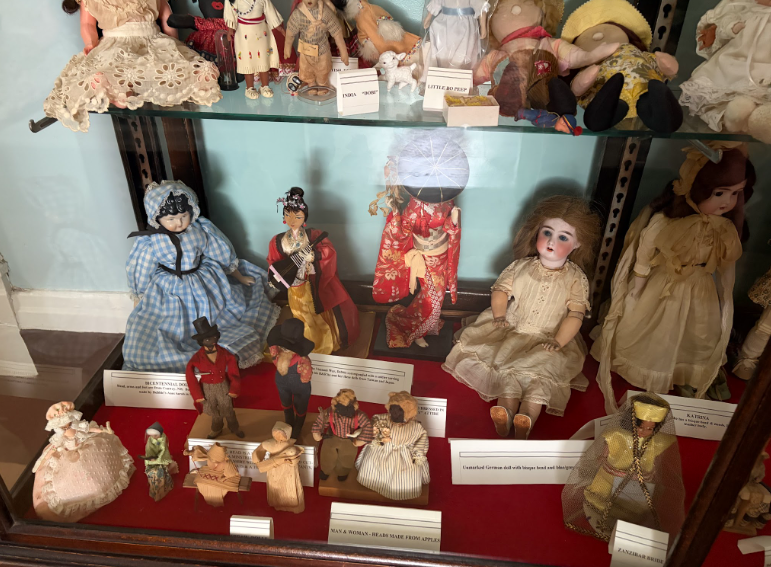
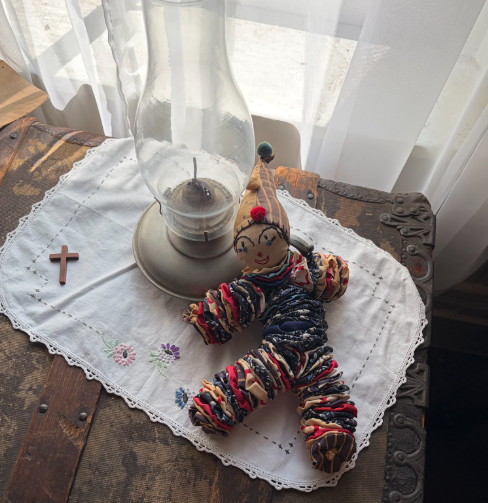
Here at the Greene County Historic Society, we have a collection of dolls on display. From a man and woman with a decomposed apple as their heads, to Taiwanese and Japanese historical figures, baby dolls, yo-yo rag rolls from the 1970s, and more, there are plenty of toys and figurines to find.
Now to raise the final question: are they just toys, or something much more?