Harvest Festival 2025 and NAPS
October 28, 2025Bottles in the Basement
March 25, 2026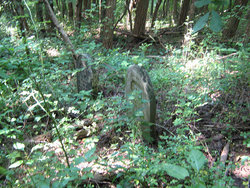
by: Felicia Duffy
The Greene County Historical Society
On Friday, November 14, 2025, the Greene County Historical Society and Museum (GCHS) welcomed two special guests who focus on preserving and reconnecting the past. Stationed in the library to keep warm on a cold evening, Candice Buchanan and Glen Toothman carefully unpacked photo scanners, laptops, and boxes of historical images. With GCHS Executive Director Matthew Cumberledge’s assistance, their visit was a demonstration of how fragile, fascinating, and deeply personal local history is.
Candice Buchanan works professionally as a reference librarian at the Library of Congress, specializing in local history and genealogy. Genealogy has been a lifelong passion; as a teenager searching for a rumored haunted mausoleum, Buchanan unexpectedly stumbled upon her own ancestors’ tombstones. That moment sparked a determination to identify past generations, turning into a pursuit that has now spanned several decades. Today, she is a board-certified genealogist with a master’s degree in public history from Duquesne University. Prior to joining the Library of Congress, she worked as a genealogist and archivist for Memory Medallion Inc., Genealogists.com, and the Greene County, Pennsylvania, Orphans’ Court.
For Buchanan, the most rewarding part of genealogy is “putting the puzzle back together.” Volunteering her time, she helps identify unnamed photographs, reconnect family lines, and ensure that people’s stories make sense within the broader fabric of history. Much of this work is shared through greeneconnections.com, a website that compiles research and connects local archives and museums. The site also provides instructions for families who want to preserve and digitize their own collections at home, ensuring their ancestors’ stories remain accessible for future generations.
During the scanning session, the group reflected on the kinds of questions they wish they could have asked their great-grandparents. Who were they, really? What were their daily lives like? The streets and towns we recognize today were vastly different in their time and familiar places continue to change for generations yet to come. Old photographs offer a rare chance to bridge that gap. Family Tree Maker 14, Roots Magic, and findagrave.com, was some of the software used to connect family lines, prepare source citations, and build up individual profiles of connecting family trees. Photo scanners create the old pictures into a much higher quality, digitalizing it for preservation so future family members can see their past clearly.
The album examined during the visit dated to the mid-to-late 19th century, a period when photography was becoming increasingly affordable and widespread. This particular style of photo album was popular among women in the 1870s and 1880s, though the images inside ranged from the 1860s to the 1870s. Many photographs were CDVs, short for carte de visite, French for “calling card.” These small, pocket-sized images were designed to be shared and collected. Tintypes were also common, offering a durable and relatively inexpensive alternative.
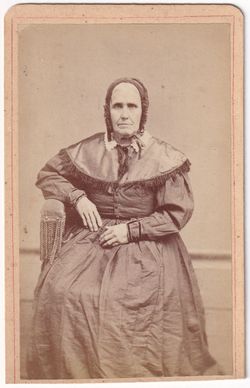
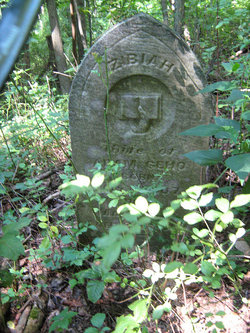
The album belonged to Zibiah Garrison Geho, born May 7, 1807, in Catawissa Township, Columbia County, and passed away on May 9, 1898, at age 91, because of a house fire. It contains photographs of her loved ones, including a portrait dedicated specifically to her, and pictures of her father who was a war veteran and lived to be around 109. Notes are written on the backs of photographs, studio stamps, and even paper tax marks from the1860s when paper was taxed during the Civil War, to help historians date and contextualize the images.
Photography during this era was almost entirely staged. Candid photography would not become common until much later in the 1920s. Studio portraits dominated, though traveling photographers setting up temporary backdrops in family homes. As a result, props, chairs, and painted backgrounds can be recognized across multiple families’ photos, revealing the presence of the same photographer moving through the countryside. Long exposure times also shaped these images; babies were often held by mothers hidden under blankets to keep them still.
Some practices that feel unusual today, such as post-mortem photography, were once common and even comforting. Far from being viewed as morbid, these images were often the only photograph a family had of a loved one, serving as a cherished remembrance.
The discussion extended beyond photographs to preservation more broadly. Many 19th-century headstones were made of sandstone, a beautiful but fragile material. Improper cleaning can cause irreversible damage, making gentle methods and appropriate tools essential. Similarly, ambrotypes, photographs on glass backed with red, green, or black material, are strikingly detailed but extremely fragile, often housed in bulky protective cases.
Through scanning, careful documentation, and shared knowledge, Buchanan, Toothman, and Cumberledge are ensuring that Greene County’s past is not lost to time. Each digitized image is more than a picture. It is a story reclaimed, a family reconnected, and a piece of history preserved for those who will one day ask the same questions about where they came from.